
THE MBRA SYSTEM
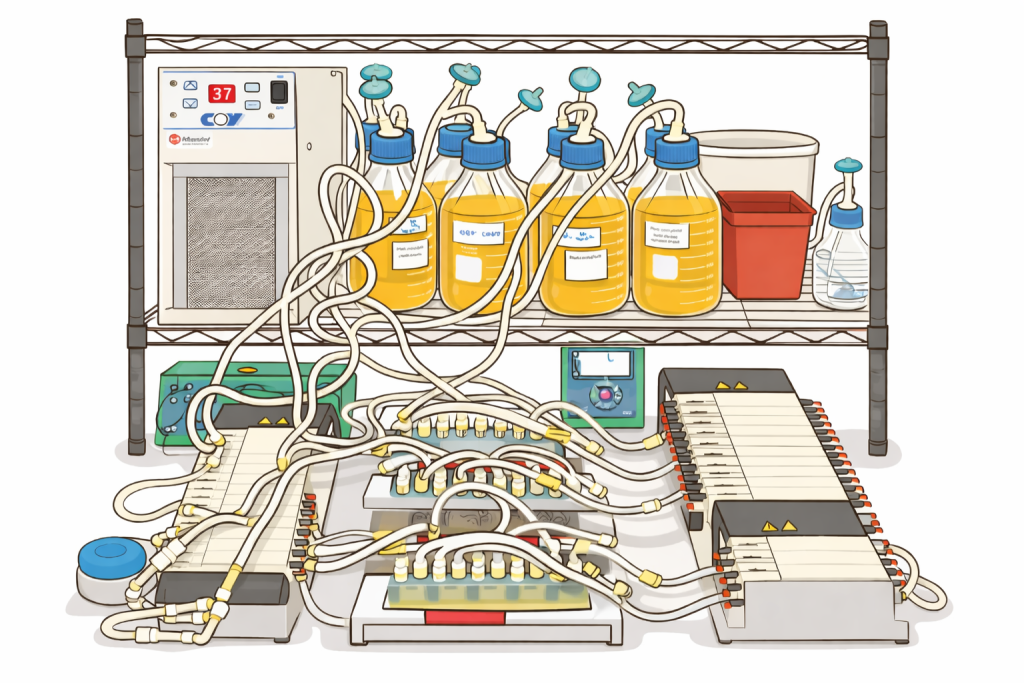
The MBRA (Mini Bio-Reactor Array) is an advanced laboratory system that allows us to study the human gut microbiota – community of microorganisms living in the digestive tract, including bacteria and fungi – in a highly controlled and reproducible way. Often described as a “artificial gut in the lab” the MBRA system enables researchers to grow and monitor an individual’s gut microbiota outside the body.
Unlike traditional approaches, which provide only single time-point snapshots of the gut microbiota, the MBRA system allows for continuous observation of how microbial communities change over time. Each reactor within the system can be independently controlled, allowing researchers to test multiple conditions simultaneously – such as different drugs, nutrients (i.e., fibre, polyphenols, tryptophan), or probiotics – while maintaining consistency across experiments.
Importantly, the MBRA system can also assess how different individuals’ gut microbiota respond uniquely to the same dietary or medical interventions. This helps researchers better understand inter-individual variability and supports the development of precision nutrition and personalised medicine approaches, where therapies can be tailored to the specific microbial characteristics of each person.
Together, this makes the MBRA system a powerful preclinical platform for understanding how diet and other interventions shape the gut microbiota and influence health. It can be used to rapidly test promising new gut microbiota-targeted therapies before they are studied in people. By identifying which interventions are most effective for different microbial profiles, researchers can better design human clinical trials aimed at discovering new personalized therapies to improve symptoms, strengthen gut health, and support long-term disease prevention and management.
How the MBRA System Works
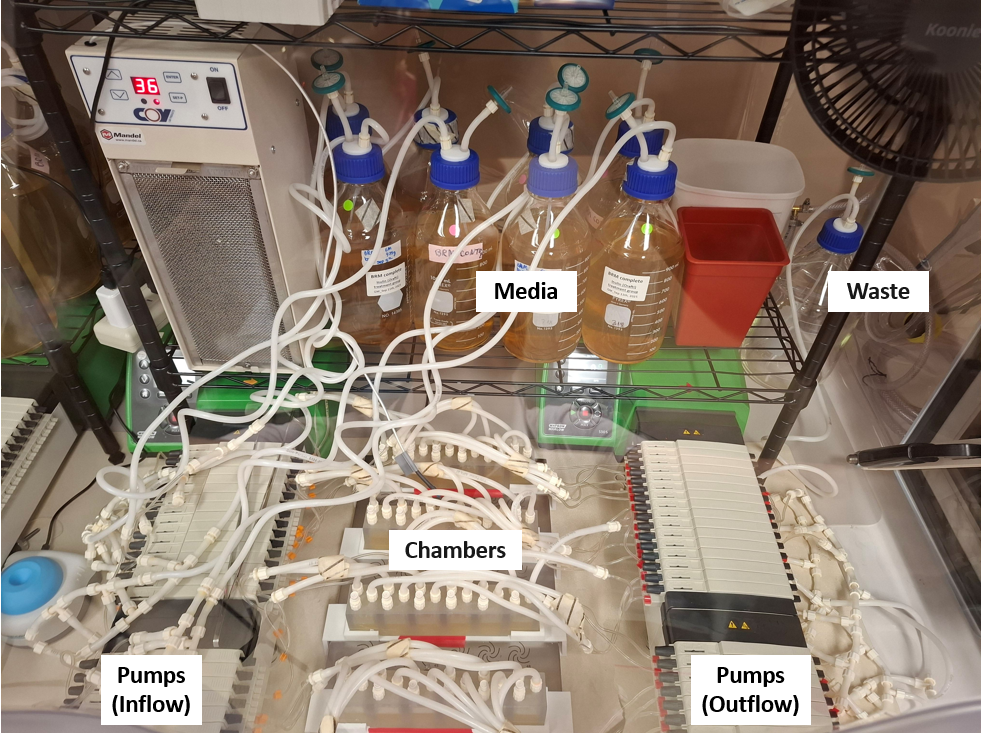
➤ Media (Nutrient Supply):
The sterile liquid media works as a source of nutrients, designed to resemble components of the human diet. It is stored in reservoirs and continuously delivered to the system, with its composition adjusted to simulate different nutritional conditions.
➤ Pumps (Flow Control):
The pumps work as regulators of flow, using multi-channel peristaltic motion to precisely deliver media into each chamber and remove liquid at the same rate. This maintains a constant volume and mimics the movement of material through the gut.
➤ Chambers (Microbial Environment):
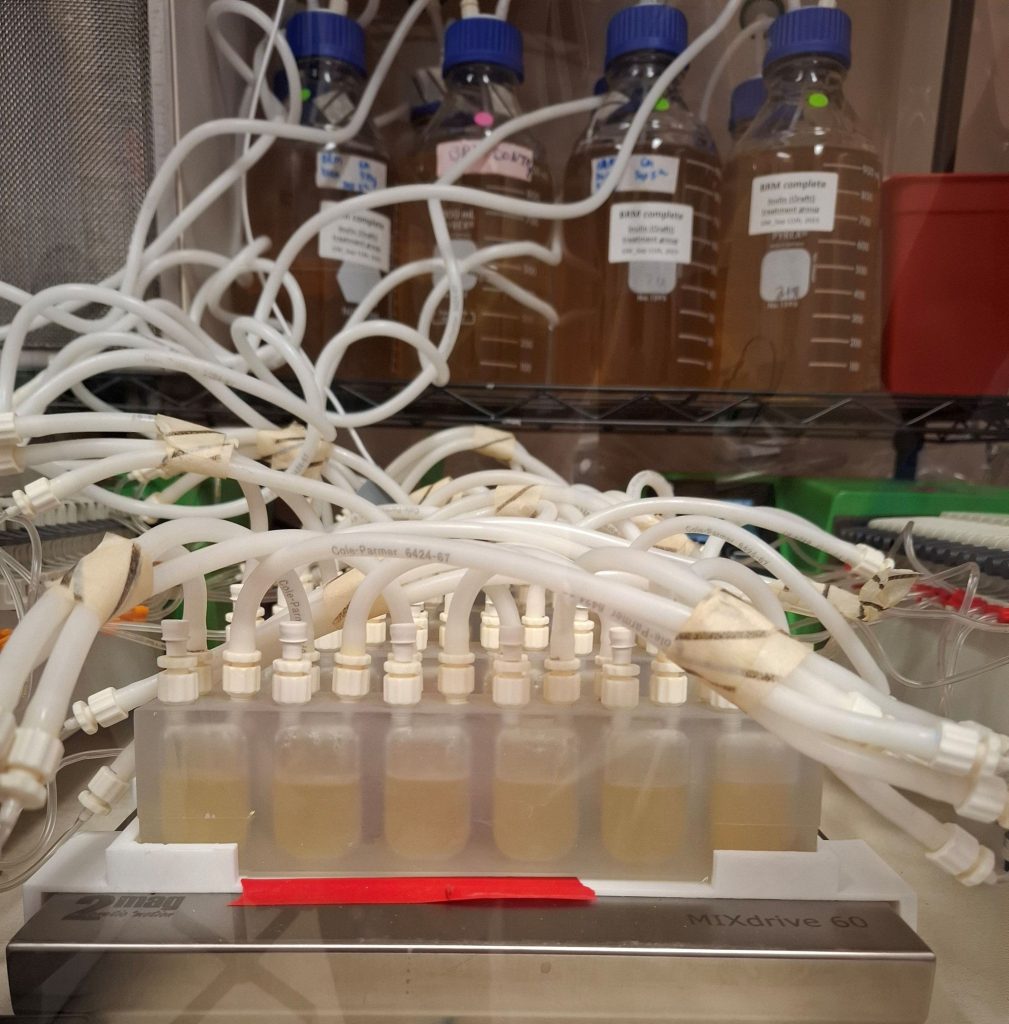
The chambers work as mini bioreactors, housing microbial communities derived from human stool samples. They are maintained at body temperature, continuously mixed, and operated independently, allowing multiple conditions or replicates to be tested in parallel.
➤ Waste (Effluent Collection):
The effluent works as a representation of intestinal transit, where an equal volume of liquid exits the system as fresh media enters.
What Can We Study with the MBRA System?

How intestinal microbial communities change over time and produce metabolites linked to health.

How foods and nutrients, such as dietary fibre affect gut microbial composition and activity.
How biological therapeutics, such as probiotic intake and FMT, affect gut microbial composition and activity.

How disruptions, such as antibiotics or drugs, affect the microbiota and how microbial communities recover over time.
Who Benefits?
- Researchers and biotechnology companies developing microbiome-based solutions.
- Healthcare innovators exploring nutrition, probiotics, and therapeutics.
- Patients and the broader public, through safer and more targeted advancements in gut health.
Contact us
If you are interested in collaboration or service requests, please contact us using the following method below:
- Genelle Lunken, UBC, Principal Investigator
- Email: genelle.lunken@ubc.ca
Interested in helping advance gut health, microbiome, and nutrition research?

Your support will help us use the Mini Bio-Reactor Array (MBRA) to understand better how bacteria and fungi in the human gut influence health and disease. Donations will directly support laboratory analyses, specialized equipment, and research to develop new microbiome-based approaches to improve the lives of people living with gastrointestinal disorders.
Together, we can advance microbiome research and bring innovative, personalized therapies closer to patients.